
Projects
Lanes in the wild
Here, you will find detailed notes on recent South African delivery projects, ranging from florist pilots to returns management, that reveal how we solve on-the-ground challenges for growing teams.
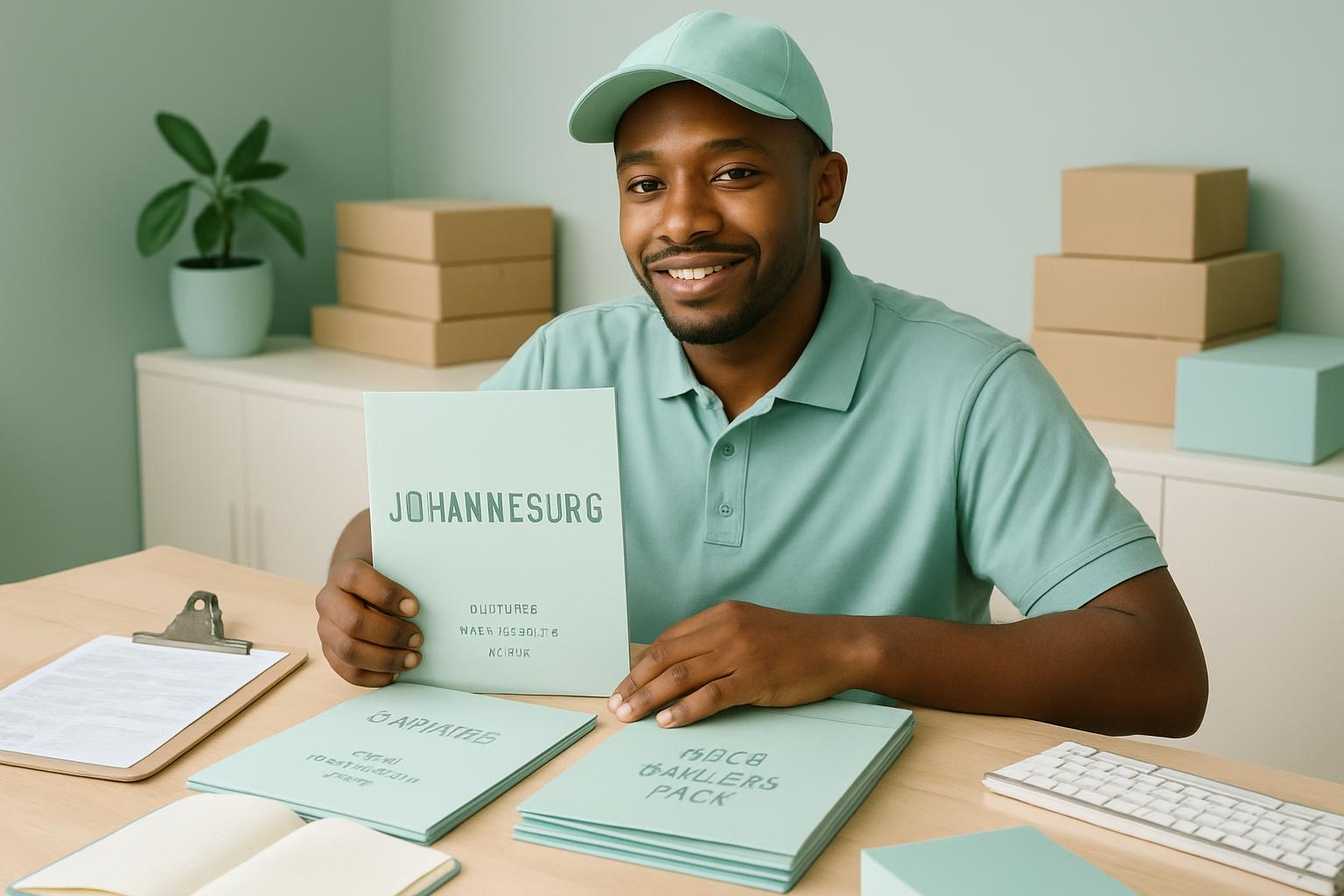
Johannesburg suburb week
Estate loop cards and gatehouse notes for an East Rand SME.
View →
Cape Town florist pilot
Same-day cut-offs for a Sea Point florist cluster.
View →
Durban pharmacy care
Soft tempo care lanes for coastal pharmacy parcels.
View →
Midrand returns calm
Reason codes and reverse lanes for an online retailer.
View →
Pretoria campus drops
Security office cues for campus parcel weeks.
View →
Mall collect rollout
Collect bands across three mall counters.
View →
Bakery morning Johannesburg
Early bakery drops before café counters open.
View →
Office stationery Cape Town
Weekly stationery bulk with bay sizing.
View →
Fragile screens Midrand
Orientation marks for small electronics.
View →
Township respect loop
Cluster order and respectful doorstep notes.
View →
Clinic slots Pretoria
Honest AM PM bands for clinic samples.
View →
Event kit Bloemfontein
Promo kit moves with receiver lists.
View →
Warehouse overflow Johannesburg
Overflow handovers when bay space ran short.
View →
New suburb Polokwane
Onboarding a northern suburb without gate surprises.
View →
Cold short-hop Durban
Short grocery hops with temp honesty.
View →
Bay kit HQ sprint
Rhythm board and exception log for a five-person ops table.
View →What ‘Lanes in the wild’ shows you
Field notes from specific South African projects show how last-mile logistics had to meet real floor conditions, not just theory. Each write-up digs into problems like suburban handovers, cold chain hops, or return flows, and explains the actions we took. Ops leads and buyers who do not want vague claims can see what actually works in Johannesburg suburbs, coastal warehouses, or township loops. The project notes show how checklists, local handling, and kit builds change under Gauteng storms, Durban humidity, or Bloemfontein’s event traffic.
- Understand the constraints and routes behind actual deliveries.
- See decisions made for specific suburbs, products, or seasons.
- Use proven field experience as a springboard for your own briefs.
How to choose relevant project notes
Start by matching your operation’s needs to a nearby use case. Are you juggling weekly suburb loops like the Johannesburg suburb week project or planning point-to-point returns as in Midrand returns calm? Pick projects that echo your own timing, product mix, or floor constraints. If you’re working with perishables and tight temperature holds, Cold short-hop Durban or Durban pharmacy care will feel familiar. For mall locations or bulk pickup, look at Mall collect rollout. Each summary names the main blockages, the path we mapped, and learnings you can bring to your own operation.
- Match your city, timing and product to the closest project.
- Check for similar constraints: hygiene, power, or access requirements.
- Scan for local weather or site conditions that match your own floor.
- Prefer notes with a similar delivery rhythm (rush, weekly, seasonal).
Common pitfalls when selecting a model lane
Choosing just by location or product name can miss critical factors. Bloemfontein’s Event kit worked because of open access and dry weather, while Pretoria campus drops needed daily timing and campus codes. Ignoring local conditions, like load-shedding schedules or warehouse humidity, often leads to rework. You should also avoid picking a model that doesn’t match your order count or access constraints. Always check if your site calls for special handling, such as signage kits, returns flows, or cold chain top-ups, before you rely on a single playbook.
- Don’t ignore access or climate notes in the original project.
- Avoid assuming product type is the only deciding factor.
- Double-check if your week follows a rush or a planned schedule.
- Ask about outlier conditions, unusual power, zone hygiene, or security.
How to brief for a similar operation
When you’re ready to scope your own run, shortlist the projects that map to your needs. Then send us a message through our contact form: name your city, planned timing and your main constraint (like access gates, box type, or hygiene signage). If you’re considering something like Township respect loop or Warehouse overflow Johannesburg, let us know up front if you expect unusual handover rules or variable loading. We’ll tell you if your operation needs a different route, especially for places like Gqeberha or if your kit requires custom prep.
Keep your message plain and centre on real restrictions, not wish lists. Our team answers honestly from Sunnyrock, Gauteng, and will outline what needs to happen before the first truck arrives. You can also consult our Checklists for typical prep steps and Support if you have further questions about matching a project to your own local site.
What you gain from reading these project notes
You’ll find concrete details and lessons from teams that move real freight under the same local rules and weather. Whether you’re a growing retailer, medical distributor, or office manager, these field examples help you avoid repeats of other people’s mistakes. The notes highlight how labelled kits, update threads, and climate handling transfer smoothly between similar setups. If your project pattern differs, say so early; unusual routes, handover hygiene, or remote timing all change the method. Our approach centres on field experience, so each summary is a reference for your own planning.
For questions or to request a tailored outline, write through our contact form. Include your city, timing, and a couple of constraint photos, our replies keep to plain language and stay practical for South African floors.