Dispatch notes

Collect bands that stick

Mall and office collection bands help your ops team avoid chaos from missed meetings, boom times or parking delays. Get specific about collection windows before your week begins.

On the team

Mall and office pickups that respect meetings and lunch. Collect bands that stick is the note we wish courier businesses had before the week turned loud.

What collect bands mean for South African teams

A collect band is a named window for pickups, like '12:00 to 13:00 after the lunch rush' or a tight 30-minute wait between meetings. In Gauteng or Cape Town, SMEs know this turns ad hoc requests into predictable moves. Instead of vague promises, you give your driver a real slot to aim for, not just a date. This suits growing teams, store managers, and dispatch leads juggling a dozen handovers a week, especially when estate gates, mall parking rules, or school security all want different things.

If your team sits in a small production office or a warehouse bay, a collect band strips away guesswork. It does not suit teams needing all-day flexibility, or those that rarely deal with locked gates, rotating staff, or timesheet-driven security. Collect bands bring the most calm when your pickups happen in shared spaces, offices, malls, business parks, and campuses.

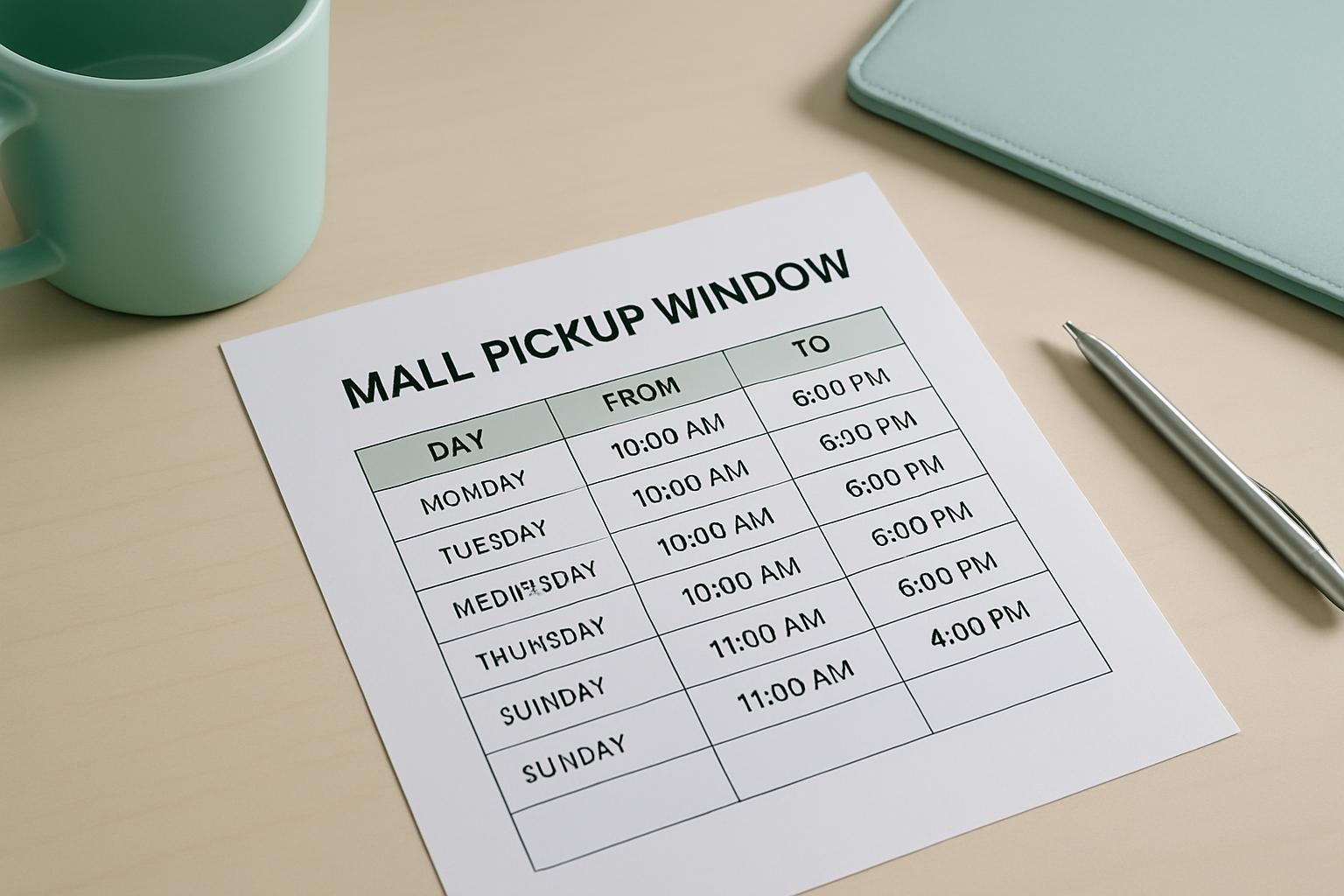
How collect bands work in practice

In practice, collect bands start with real-time realities: mall shops that lock up for lunch, campus gates that close for events, or office managers who disappear to meetings. The ops lead sets a named window for the driver, usually through our contact form. The window needs to respect people’s actual movement, no point promising a 09:00 collection if the security guard doesn’t open the boom until 09:30, or if the cashier is still banking from the morning rush. Inland, Highveld dust is a factor for fragile collections, while coastal teams factor in humidity. A short WhatsApp chain can spiral out of control, so the band goes on the lane card, the printed plan, and, ideally, a photo sent to all parties. If load-shedding knocks out the whiteboard, at least the plan survives on paper.

A small slip can make a difference. Say your handover is set for after-lunch at a mid-size Joburg office park. If reception closes for a staff birthday, your driver is left circling the building. That’s why we recommend naming a backup slot on your collection guide.

A short example: avoiding chaos in a mall collection

Picture a small retail team in Durban sending ten online orders each week. The manager books a 14:30 to 15:00 collect band for Thursdays at the mall storeroom. The ops lead confirms through our contact form and prints the lane card. On the day, load-shedding hits at 14:15, but because the window was already named and the checklist printed, the driver arrives on time, gets the parcels out, and leaves before the post-lunch traffic clogs the car park. The team avoid messaging chaos and no one misses a shipment.

If there’s a holdup, maybe mall security want to check parcels, everyone already knows the backup band: 16:00 to 16:15, when the shift changes. The team keeps moving, and stress stays low. Checklists keep it visible for everyone, even as the week fills up.

What to prepare before sending Hello Logistics

Preparation matters. Before you send a message through our contact form, get these details clear for your collect band:

We recommend sending a photo of your checklist, your city, and the name of the lane (such as 'Melrose Arch', 'King Shaka Thursday', or 'Sunnyrock Weekly'). A brief summary helps, no need for a big pitch deck or a full route map. A clear collection window lets us confirm a plan for your team.

  • The exact address and usual collection point (mall shop, office reception, campus gate, etc.)
  • The requested collection band (start and end time, with attention to lunch periods, load-shedding, and shift changes)
  • A photo or scan of your checklist if available
  • Contact details for the handover (not just the company main line)
  • A summary of any restrictions (security, parking rules, boom access)
  • Your preferred backup collection band

Common pitfalls and how to avoid them

The biggest pitfall is ignoring local rules. Malls may close storage rooms early, campus gates may need paperwork, estate booms might not let couriers park inside. Another easy mistake: over-relying on group chat for last-minute changes. If the ops lead is out, no one knows the current plan.

Don’t skip the backup slot. South African weeks run on surprise power cuts, school runs, and city-wide events. Preparation and clear collect bands help avoid bottlenecks and keep your parcels out of limbo. Honest AM and PM bands are worth exploring if mornings and afternoons work better, or reason codes customers accept if you keep getting collection refusals.

Talk to the Hello Logistics team

Contact form · Sunnyrock Ops Park